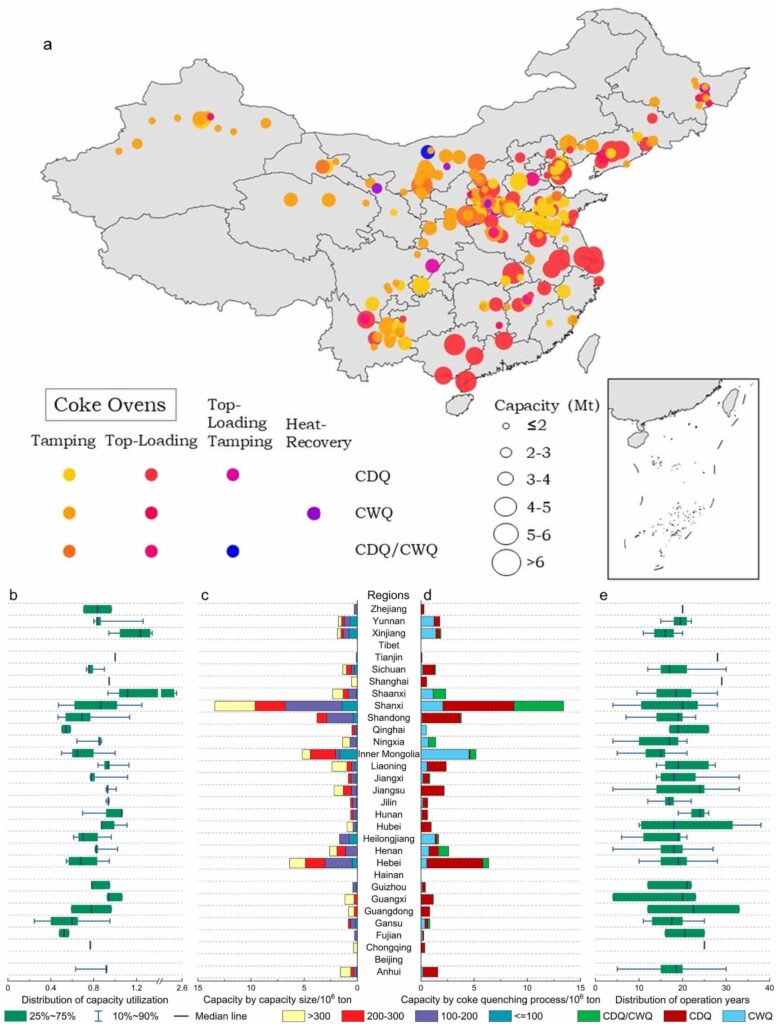
This research Letter outlines a strategic phase-down of China’s coking plants, which dominate global coking production with a 70% proportion, to achieve climate and environmental benefits. Li et al. integrate data from 329 Chinese coking plants to formulate optimized retirement pathways that could produce water saving and emission mitigation co-benefits. Trade-offs of ascending coal use were also examined, providing a data-driven roadmap for managing China’s coking transition.
Who shapes the just transition? Examining intellectual hegemony in climate research
Kennedy Mbeva, Chukwumerije Okereke and Reuben Makomere
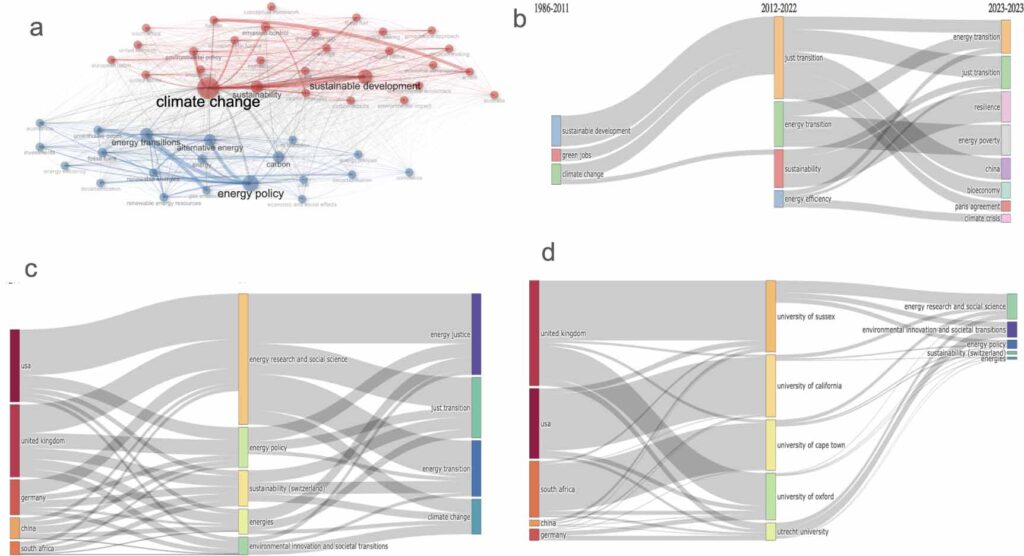
This Topical Review applies bibliometric techniques to analyse a dataset of 5432 journal articles on the just transition. The findings reveal that a small group of scholars and journals exert disproportionate influence, steering the discourse towards technological fixes rather than structural political change, societal transformation, inclusive sustainable development, and addressing global inequality. Mbeva et al. call for integrating diverse perspectives to ensure transition strategies are both effective and equitable.
Meltwater markedly exacerbates socioeconomic exposure to floods in the eastern Himalaya
Wei Qi, Yanpeng Cai, Qian Tan, Xingxing Kuang, Junguo Liu and Deliang Chen
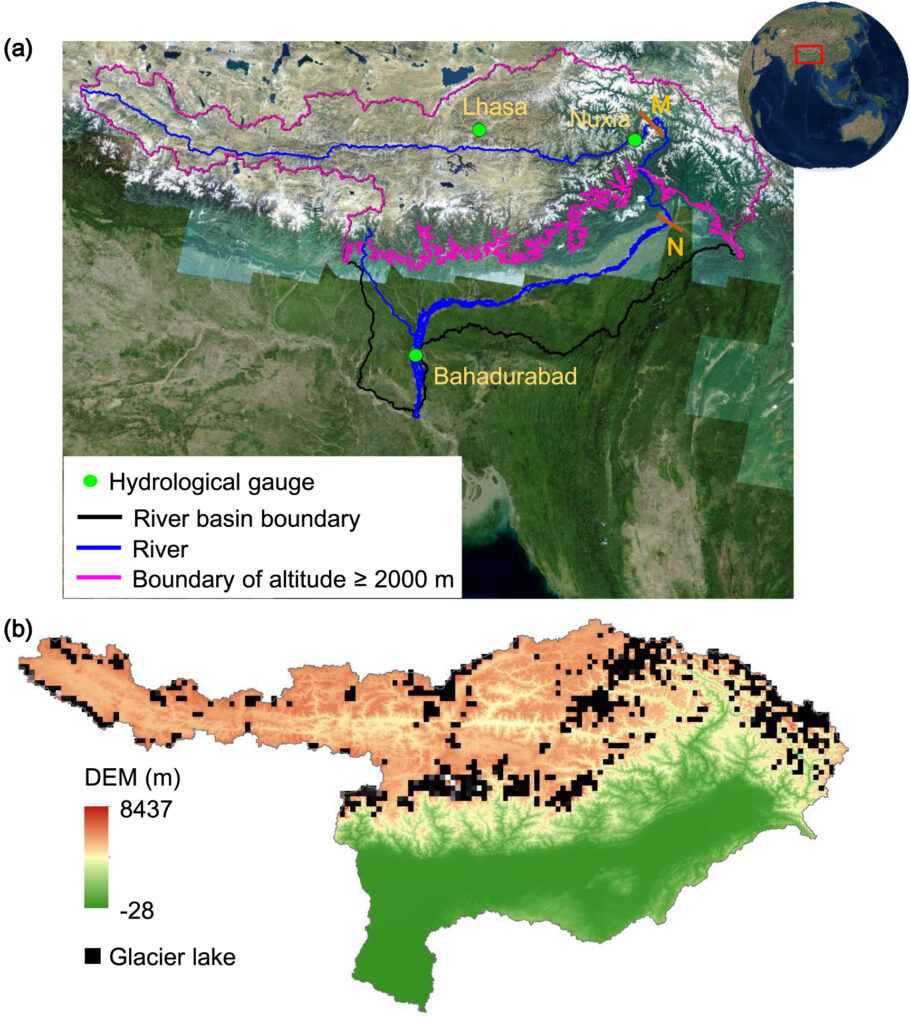
Qi et al. present the complexity of flood hazards across high mountain Asia, with meltwater significantly increasing socioeconomic exposure to floods in the eastern Himalayan Brahmaputra basin. At the basin scale, meltwater amplifies population and GDP exposure to flooding by 1.3% and 1.5%, respectively, while in high-altitude regions these figures surge to 27.9% and 33.3%. The study underscores the need for targeted flood management strategies in this critical and vulnerable region.
Growth synchrony in white spruce across Canada and Alaska: climate or distance?
Fang Wu, Junwen Jia, Cheng Li and Xuefeng Cui
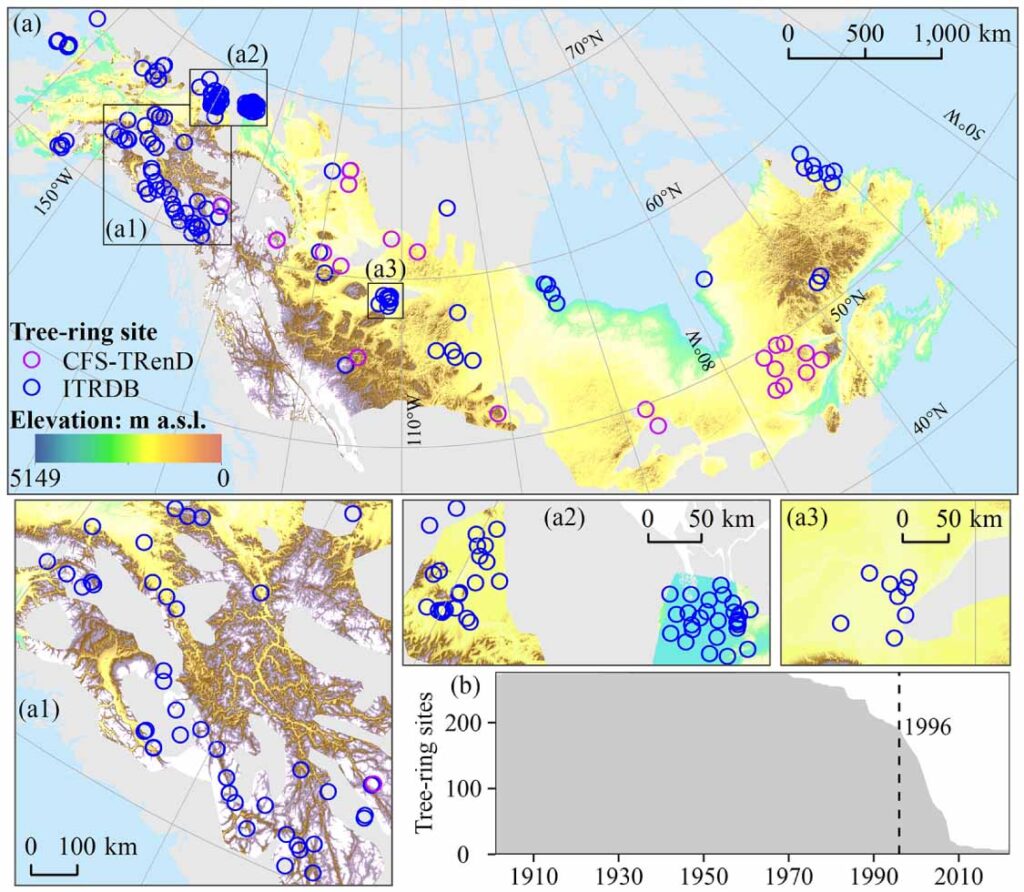
This research paper investigates the growth synchrony of white spruce across Canada and Alaska, outlining that climate, particularly temperature, is the primary driver of this synchrony, while geographic proximity has minimal influence. The findings reveal a biogeographical pattern in growth synchrony, suggesting that management efforts should promote asynchronous growth to enhance population stability in regions with high synchrony. The study provides new insights into boreal forest dynamics and supports adaptive conservation strategies under climate change.
Heatwaves in a net zero World
Sarah Perkins-Kirkpatrick, Lucinda Palmer, Andrew King and Tilo Ziehn
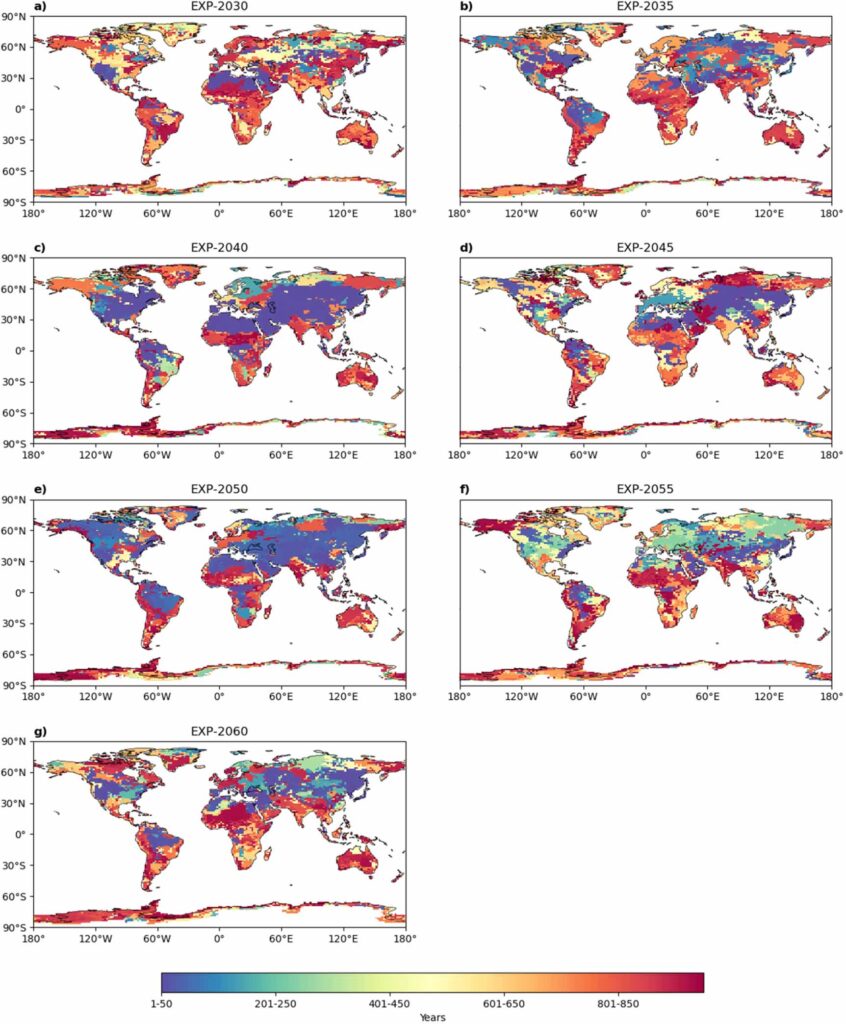
Perkins-Kirkpatrick et al. examine heatwave changes after anthropogenic greenhouse gas emissions reach net zero. The results show that delays in reaching net zero lead to longer, hotter, and more frequent heatwaves. If net-zero is delayed until 2060, heatwaves will exceed the upper thresholds defined in the Paris Agreement, posing severe challenges for vulnerable low-latitude regions. The study challenges the assumption that conditions will improve post–net zero and emphasizes the urgency of proactive adaptation measures.