




ERX编委访谈|孟加拉国拉吉沙希大学Jaker Hossain教授
访谈详情
My choice to work in this field is driven by a fascination with the intersection of energy, materials science, and photonic technologies. I focus on semiconductor physics and high-efficiency energy conversion technologies, including solar cells and thermophotovoltaics (TPV). My research involves exploring various photovoltaic device architectures to reach the Shockley–Queisser limit and utilizing machine learning for performance prediction and optimization. I specialize in thin-film deposition techniques such as spin coating, PECVD, and PVD.
Recently, I have expanded my research into integrated photonics, specifically waveguides, ring resonators, photonic crystals as well as metamaterials for next-generation 6G communication technologies. My multidisciplinary approach aims to advance energy conversion, photonic integration, and machine learning in photovoltaic design, contributing to impactful real-world solutions. I am drawn to photonics for its innovative potential and significant societal impact in areas like telecommunications and medical devices.
2. 您目前从事的研究工作有哪些?
I am currently doing the simulation work on the phonics sector like ring resonator, photonic crystal, rectangular and bending waveguide, DFT calculation, thermophotovoltaic, solar cell and photodetector with and without tandem cell. Also, I am working on the machine learning as well as metamaterials. Again, different kinds of synthesis work of different compounds have done by me using spin coating, PECVD, and PVD.
3. 您认为五年后该领域的研究重点将会是什么?
Based on current trends and advancements in the field of photonics, it is likely that the research focus in the next five years will include several key areas. These may encompass the development of integrated photonic circuits for faster and more efficient data processing and communication, advancements in quantum photonics for quantum computing and secure communication, and the exploration of novel materials such as two-dimensional materials and metamaterials to enhance photonic device performance. Additionally, there may be increased emphasis on applications in biomedical imaging, sensing, and energy harvesting, leveraging the unique properties of photonic technologies. Overall, the field is expected to continue evolving towards more miniaturized, efficient, and versatile photonic systems with broad interdisciplinary applications.
In photovoltaics, the focus will shift towards tandem architectures that exceed conventional efficiency limits while ensuring long-term stability and addressing environmental concerns. Emerging technologies, such as transparent and flexible solar cells and solution-processed thermos-photovoltaics (TPVs), will also gain traction, enabling new applications.
Machine learning will play a crucial role, evolving from device optimization to include automated material discovery, predictive defect analysis, and real-time performance diagnostics. The integration of AI-driven design with experimental workflows is expected to significantly accelerate innovation cycles for thin-film and photonic systems.
First-principles simulations using Density Functional Theory (DFT) will become more sophisticated, incorporating complex variables like defects, interfaces, and temperature effects. This advancement will lead to more accurate predictions of band gaps, optical properties, and carrier dynamics in next-generation materials.
4. 是什么吸引您加入Engineering Research Express期刊编委团队?
I am attracted to join the board member team of the Engineering Research Express journal due to opportunities to contribute to the advancement of engineering research, influence the direction of scholarly publications, collaborate with leading experts in the field, and support the dissemination of high-quality research. Additionally, serving as a board member can enhance professional reputation, provide networking opportunities, and allow for active engagement in shaping the future of engineering scholarship. Also, Engineering Research Express is a very much reputed journal in the era of engineering research.
5. 您认为像Engineering Research Express这样的期刊对领域的发展有什么重要影响?
Journals like Engineering Research Express play a significant role in advancing the field by providing a reputable platform for the dissemination of high-quality research findings. They facilitate the rapid sharing of innovative ideas, methodologies, and results, which can accelerate scientific progress and foster collaboration among researchers. Additionally, such journals help establish standards for research quality and integrity, contributing to the overall development and credibility of engineering research. By making research accessible to a broader audience, they also support the ongoing education and professional growth of engineers and scholars in the field.
编委介绍
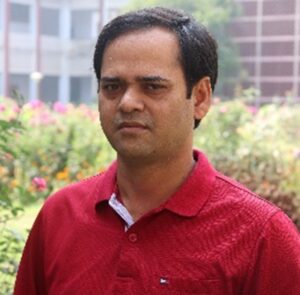
Jaker Hossain 教授
孟加拉国拉吉沙希大学
- Dr. Jaker Hossain is currently working as a Professor to the Department of Electrical and Electronic Engineering, University of Rajshahi, Bangladesh. He received his PhD degree from the Saitama University, Japan in 2017 under Japanese Government (MEXT) Scholarship. Dr. Jaker Hossain has shown a strong commitment to education and research. He published over 125 articles and two book chapters in reputed journals and publishers. His research focuses on a holistic approach to materials that integrates experimental methods and simulations for the advancement in optoelectronic devices. He received “Dean’s Award 2020” for research in the Faculty of Engineering, University of Rajshahi, Bangladesh.
期刊介绍
- 2024年影响因子:1.6 Citescore: 1.9
- Engineering Research Express(ERX,《工程研究快讯》)是一本涵盖工程科学所有领域的多学科期刊,致力于发表新的实验和理论研究。ERX对文章长度的具有灵活性并采用快速同行评审政策。发表范围涵盖:电气工程(包括控制工程、量子工程、电子工程、光学工程、电力工程、机器人和半导体工程)、 机械工程(包括航空工程、汽车工程、材料工程和真空工程)、土木工程(包括环境工程、水利工程、海洋和地理工程、结构工程)、化学工程(包括生物工程、食品科学、化学合成和精炼,以及微加工)等方面。