


MRX编委访谈|印度理工学院德里分校Jayant Jain教授
访谈详情
1. 您为什么选择从事相关的领域研究?
2. 您目前从事的研究工作有哪些?
3. 您认为五年后该领域的研究重点将会是什么?
4. 是什么吸引您加入Materials Research Express期刊编委团队?
5. 您认为像Materials Research Express这样的期刊对领域的发展有什么重要影响?
Journals like Materials Research Express play an important role in advancing the field by providing a platform for disseminating new ideas, discoveries, and emerging technologies in materials science.
编委介绍
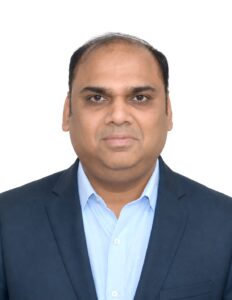
Jayant Jain 教授
印度理工学院德里分校
- Dr. Jayant Jain has completed his B. Tech with Honours in Metallurgical Engineering from NIT Raipur, India. He has obtained his M. Tech in Materials Engineering from IIT Kanpur, India in 2004 and PhD in Materials Engineering from University of British Columbia, Vancouver, Canada in 2010. He has also worked as a Post-Doctoral Research Fellow at Institute for Frontier Materials in Deakin University, Geelong, Australia till 2012. He joined Department of Applied Mechanics as an Assistant Professor in 2012. He has been promoted to Associate Professor and Full Professor at Department of Materials Science and Engg., IIT Delhi in 2018 and 2022, respectively. During this period, Prof. Jain has also held visiting professor positions in various universities across the globe such as NYCU Taiwan, UBC Canada, Deakin Australia, CNU South Korea and UoB Birmingham, HCMTU Vietnam. Prof. Jain was also the Head of the Department from 2024 to 2026. Most recently, he has become the Dean, Corporate Relations at IIT Delhi. His research work is focused on the areas of materials characterization, microstructure-property correlation, alloy design and control of microstructure and texture through processing. He has published more than 175 international journals papers. He has completed nearly 50 industrial consultancy projects and more than 15 sponsored research projects. A total of 13 students have completed PhD under his supervision.
期刊介绍
- 2025年影响因子:2.5 Citescore:4.3
- Materials Research Express (MRX)采用快速出版的模式,发表各类功能材料在设计、制造、性能和应用方面的最新研究。从2020年起,MRX转变为金色开放获取出版模式,以最大限度地传播材料科学的所有领域的研究。文章内容包括:生物材料;纳米材料和纳米技术;碳的同素异形体和二维材料;电子材料;玻璃、陶瓷和非晶材料;磁性材料;金属和合金;光子材料和超材料;聚合物和有机化合物;智能材料;薄膜等。